Bowel cancer symptoms often go unnoticed. Bowel cancer symptoms are easily dismissed.
Too much coffee, stressful period, hormones, irritable bowel syndrome (IBS), or an intolerance.
If you aren’t fully aware of the symptoms, they can feel like normal body behaviour—so they often get missed.
This Bowel Cancer Awareness Month, we’re placing the symptoms in plain sight. The question is: will people notice them—just like the real signs of bowel cancer?
Colorectal cancer is also known as bowel cancer. Bowel cancer is cancer that starts in the large bowel (colon cancer) or back passage (rectal cancer).
According to the 2024 National Cancer Registry of Ireland (NCRI) report, an average of 2,500 people are diagnosed with bowel cancer in Ireland every year, 1,452 men and 1,047 women.
Colorectal cancer is the second most common cause of cancer death overall for men and women in Ireland.
Around 1 in 20 people get bowel cancer. It is more common over the age of 60. Almost 18 out of 20 cases of bowel cancer in Ireland occur in people over 60.
However, one in five diagnoses of bowel cancer in Ireland is to someone under 60 [2], while 1 in 10 diagnoses is to someone under 50 [3]. Some 50% are diagnosed at 70 years and older. This means a significant number of people are diagnosed outside the current BowelScreen age eligibility range of 57–71.
Brought to you by


Facts

In Ireland, around 2,500 people each year develop cancer of the bowel, also known as colon, rectal or colorectal cancer.

Bowel cancer affects both men and women.

One in five diagnoses of bowel cancer in Ireland is to someone under 60 [2] while 1 in 10 diagnoses is to someone under 50 [3]. Bowel Cancer is not just a disease of older age.

With all cancers, survival is strongly influenced by stage at diagnosis. Bowel cancer has a 5-year survival rate of 97% in those diagnosed at Stage I and this reduces dramatically to just 14% in those diagnosed at Stage 4 [1].
Signs & Symptoms

Changes in bowel habit such as diarrhoea, constipation, or narrowing of the stool for no obvious reason for six weeks or more.

Blood in the stool (rectal bleeding), either bright red or dark and tar-like.

Abdominal cramps, pain or bloating that won’t go away.

A lump in your back passage or tummy (abdomen).

Unexplained weight loss that is sudden and losing weight without trying.

Tiredness. Feeling constantly tired and lacking energy, even with enough rest.

Iron deficiency anaemia due to chronic bleeding, causing fatigue, weakness, and paleness.
Ambassador Stories
Sometimes, the most important lessons come from the experiences of others. Our ambassadors have been where you are, and they’ve come through with a wealth of hard-won wisdom.
Each of their stories serves as a practical guide to better health—highlighting the red flags that are often overlooked and the steps you can take to stay ahead of the disease. Read their accounts and learn from their experiences.

I was diagnosed when I was 48 years young and fairly fit. I was swimming, biking, and taking part in triathlons (at a recreational pace!). I have always been very active throughout my life. More importantly I was a mother to four, Roisin, Cathal, Aoife and Daire (14-23 years) and wife to one husband ,Frank.
I was running a busy Physical Therapy clinic. I tutored in a third level private college teaching adults in the techniques and theory of Physical Therapy. I also ran Pilates classes locally. I was very busy, which I thought was affirmation of a fulfilling life. In 2015 I put down feeling tired to a very emotionally tough year. My dear parents in law passed away from illness and two close friends in tragic circumstances. The deaths of my two close friends in murder suicide helped me deal with what was my biggest challenge, a diagnosis of Colorectal cancer that had already spread.
The changes in my bowel habits crept up without me noticing. When do we really talk or think about our loo and poo habits?! For me the first alarm bells rang when there was blood in the loo, at this stage I was already in big trouble. I initially put this down to eating too much beetroot! When I realised this was happening irrespective of what I ate, I made time to notice some other insidious symptoms.
What were those sneaky symptoms? The fatigue. Well, I lead a busy life, and I have had a tough year. Second, which wasn’t apparent until I took time to stand still and realised that when I went to the loo, I would need to go again shortly after. I didn’t have diarrhea, but more of a feeling of not quite ‘finishing the job’. This is known medically as ‘tenesmus’…another red flag!!! Thirdly, there was red water in the loo, initially put down to eating too much beetroot! Then finally as I wasn’t picking up on any of the other symptoms my body put out a symptom I couldn’t ignore. There were splatters of blood on the white porcelain bowl. It was time to get checked out. I even brought a photograph of my bowel/bowl exploits to my GP. He declined to view them but did refer me for a colonoscopy.
The colonoscopy showed a large rectal tumour and further tests revealed tumours in my liver. At no time were the words Stage 4 mentioned and neither did I ask. Following my diagnosis, I realised there had been another red flag which I had put down to some repairs after the birth of my last child. If plonked down on a soft seat, or if the kids bumped into me at a certain angle, I would feel pressure or pain down there somewhere.I put this down to running repairs during childbirth fourteen years previous. When it happened, I’d say to myself, I must get that checked to see if I should be feeling this all these years later, but true to form, there was something else that would need doing! This pressure/pain was actually the tumour growing. Women of childbirth experience, please take note!
My bowel surgeon, Prof Ann Brannigan said the tumour was probably growing for ten years. My cancer is not genetically linked, however my children are advised to have colonoscopies from 38 years of age. In most cases this cancer is so treatable when found early. We ALL must lobby for earlier national screening.
My initial plan was an Anterior bowel resection surgery to remove the primary tumour, construct an ileostomy (poo out of a hole in my stomach) and stoma bag to catch the poo. I aptly named my stoma ‘Louis Vuitton’ on the good advice of my liaison nurse, to treat my stoma as my friend. Wise words indeed. It allowed my family and friends to refer to the fact I had ‘a bag’ in very normal terms. How’s Louis doing today? Eight weeks later I had liver surgery in February 2016 and the following six months I had twelve rounds of Folfox chemotherapy.
My mind has been cast back whilst writing this. I had a friend who died around the time of my diagnosis. Rory died within six weeks of his cancer diagnosis. My ‘twelve month plan’ catapulted me into a place of gratitude. I had a plan. The traumatic shock and nature of my friends’ deaths helped me to accept that this was not the worst thing that could happen. I say to anyone who receives a cancer diagnosis, please please be kind to yourself No one else can possibly know how you feel as every person is unique.
Try to remember we can only respond to any given situation, relevant to our life experiences. The toughest part was telling my children. As a mother you only ever want to protect those you love and then you have to hurt them by delivering this news. Then on to my Ma, my brothers and sisters and my friends….FFS! I was the fit and healthy one.
If you find yourself having to navigate this scary time, please be kind to yourself.
When I completed my year-long plan, I was referred to Exwell Medical, led by Dr Noel Mc Caffrey and his wonderful enthusiastic team (previously MedEx programme) . Anyone reading this, who has any chronic condition, please Google ‘Exwell Medical’ and give them a call. Their programmes are changing lives and more importantly the quality of lives through medically prescribed exercise classes. I still attend today. It gives me belief and confidence in my body.
In 2017 I had recurrence with a colorectal tumour in each lung. I had two surgeries within a month followed by six months of Folfiori Chemo. 2020 saw a recurrence in my lung. Following surgery I was put on close surveillance with regular CT scans. In 2022 a diagnosis of a Colorectal tumour in my Trachea was successfully treated by a series of ‘day job’ scraping bronchoscopies. A big shout out to Prog Donna Eaton and team.
Jan 2026 I had further tumour removed from my lung and I am currently on active surveillance.
I have been under the care of the amazing Mater Hospital for the past ten year The Gastrointestinal, Hepatic and Thoracic units and continuing care of my Oncologist Prof, Mr John Mc Caffrey. They say it takes a village to raise a child. It takes a whole hospital community to care for a patient with my diagnosis.
I feel very blessed to be living and living well with this disease for so long. This is down to the amazing work of the various sponsored cancer research programmes and the cancer support service providers like Marie Keating Foundation. I am so thankful to see my kids become ‘adult kids’ (they are always your kids) and to recently welcome our first Grandchild Jack (4mths).
Over the past ten years there have been many tough times and many blessings, this is why the term ‘rollercoaster’ is used..This term ‘journey’ referring to canver doesn’t sit right with me. A journey is something you choose to go on. Nobody chooses cancer or any other illness. Cancer is an experience that happens to you. My attitude of acceptance and gratitude gets me through each day and each recurrence. To accept each diagnosis, ‘It is as it is’ and to be very grateful and blessed to have a plan.
My diagnosis stopped me in my busy tracks and subsequently allowed me to re-evaluate my life. If I wasn’t so busy I may have picked up on my symptoms earlier. This experience stopped me going back to the ‘busyness of life’. I thrive more on the business of being present each day. I try being gentler with myself and others. These experiences have brought me the ability to really focus on and appreciate each day.
Onwards and Upwards

“In late July 2025, I was in the car, and an ad came on the radio. It was for the BowelScreen programme. I heard the ad, and it was later that day, when I was with a buddy of mine – whose brother was dying from cancer – that I decided to complete the form, and of course, it was free, so there was nothing to lose. While having tea, I registered for the BowelScreen programme. I received the test, completed it, and sent it off. I was confident that it would come back with no action required, as I religiously get my bloodwork done annually, and I had just gotten my results that showed nothing to be concerned about.
I received my letter asking to go for a colonoscopy as traces of blood had been found in my sample. I live near the Mater Hospital, so it was an easy trip to it. I did the preparation for the consultation and went on the day. I understood how it was rare enough to find anything, so I was happy enough.
While doing the colonoscopy, the doctor found a polyp, which he removed, and then discovered the tumour. He took samples from the tumour and sent them off for examination. I still wasn’t aware of what it was until I came out, and I heard him saying I was being sent for a CT scan. The reality that there was a problem was becoming apparent. The nurse then mentioned that the next time I would be there was to see the surgeon.
The machine kicked into place with the MRI next, and then an appointment with Professor Ann Brannigan on the 4th of September 2025. She broke the news that it was cancer. She said that the next step was a multidisciplinary team meeting the following day, and she would like to have a look at the problem herself, so she did an examination then and there.
Post the MD team meeting, I got to meet Dr Darren Cowzer, an oncologist. He described the next stage of treatment of four cycles of chemo starting in late September and ending in December. I got intravenous chemo on the first day and then 14 days of tablet chemo and a week off. I was lucky as the only side effect was neuropathy, which stopped me from going sea swimming. The first two cycles were very good; I thought I had been given a placebo. However, the third was more difficult, and the 4th was very hard due to fatigue. Once I finished the chemo cycles, I had another round of tests. Back from an MRI and coloscopy, and as I had responded to the chemo so well, I was scheduled for robotic surgery in January. I did the pre-op session and met the stoma nurses just in case I needed one.
Went in for surgery and woke up in the high dependency unit. The first thing I checked was if I had a stoma, but luckily, I didn’t require one. I spent 5 days in the hospital and at time of writing, I am now 12 days post-op. I am doing well, and most of the pain is gone, and I am ready to get back into action. I just have to avoid heavy lifting. Back for a review at the end of the month.
The hardest conversation I had to have was with Elliott (21) and Zac (17). Facing my sons to tell them I had cancer was one very tough moment I experienced after diagnosis as the same week a very good friend of mine had died from cancer and her son was one of Elliotts best buddies. It brought the reality of the fear everyone experiences when they hear the word cancer. I was lucky because early detection ensured the possibility of a high survival rate, which when explained to the boys gave them the confidence that everything was going to work out. In fact I worked all the way through my treatment as I thought that having life as normal for everyone took away the fear associated with cancer.
I have documented my journey on Instagram @brendan.j. looney”
On the 5th March 2026 Brendan was told that he was told there was No Evidence of Disease (NED). It was Brendan’s most emotional moment in the whole journey and cried with the joy of finding out that he was now cancer free.

“I want to raise awareness because the symptoms can be so small, so easy to dismiss—especially for anyone under 50 – I want them to know, even a small symptom matters. If my story can help just one person, then it’s worth it.”
Laois Mother of three Fiona Mockler was only 49 when she was diagnosed with Bowel Cancer.
She had noticed blood in her stool and put it down to haemorrhoids as she otherwise felt healthy and well. Cancer never crossed her mind, initially.
Due to her maternal grandmother having had a bowel cancer diagnosis, Fiona decided she couldn’t ignore it and went to her GP.
On Friday, Dec 13th, 2024, she had her colonoscopy.
This is Fionas story.
I was 49 years old when I attended the Beacon Hospital for a colonoscopy on Friday, Dec 13th, 2024. For a few weeks prior, I noticed one main symptom: a change in bowel habits and the appearance of blood in my stool. Sometimes it was bright red, sometimes darker and it was a combination of trickles or clots. At first, I put it down to haemorrhoids which I was aware I had, and I didn’t give it much further thought. I felt well – no fatigue, no weight loss, no pain – so cancer never crossed my mind. But because my maternal grandmother had a colorectal cancer diagnosis my gut instinct was not to ignore it.
On December 5th, just two weeks before Christmas, after discussing it with my husband Philip who was working in the Middle East at the time and outlining my concerns, I took photographic evidence to my GP – it was a case of having to, there was no better way of explaining what I was seeing ! Philip also had a raised awareness as to the risks associated with ignoring signs/symptoms of colon disease. Sadly, he lost his own mother to colorectal cancer in 2007 after a delay in early intervention due to misdiagnosis of her symptoms.
My GP asked me some questions and why I was concerned, I told her that I felt good, all was fine however I had some bleeding and said I needed to show her to describe it, once she saw the pictures she said that an urgent colonoscopy was needed and she drafted a referral and sent it immediately to a local hospital/consultant and marked it urgent. She also tested me for Coeliac disease, and I still thought it could possibly be irritable bowel syndrome (as I had the odd mild cramping moments but so minor I wouldn’t have even considered taking any medication) or something related – but never cancer.
I left feeling hopeful that I had acted quickly and that I would be seen pretty soon, but when the next day came and I still had not received any confirmation that the referral had arrived at the specialist I started to get more anxious over that weekend. On the Monday morning, I picked up the phone and called his clinic to see if anyone had seen the referral only to discover that no one had even seen it, staff holidays meant it wouldn’t be reviewed that week at all. I had also been informed that I might be waiting a few weeks for a colonoscopy in my local region, so I became more concerned.
That’s when I realized I had to advocate for myself. I made a list of hospitals and specialists, anywhere that might take me quickly for a colonoscopy. We had had a few excellent experiences with the Beacon Hospital over the years and so I finally rang them. I told them how urgent it was, and that I couldn’t get seen in my local hospital. They reassured me they would call me the following day to let me know if they could see me the following week. They rang me the following day and said they could bring me in later that same week. I felt such relief. My husband flew home from overseas and we headed to the Beacon on Friday 13th December, it’s a date that I will never forget.
After the procedure, while I was in recovery with my husband beside me, the consultant Mr Hafeez and his team pulled the curtain around us I instantly knew something wasn’t right. He didn’t mince his words and told us he had concerns—he didn’t say the word cancer—just that he saw something suspicious and that it needed immediate further investigation.
I was in utter shock, but I asked him straight away: “How serious is it? Is it a tumour? Has it moved elsewhere in his opinion” but of course he said he couldn’t give exact details yet, but from what he saw, he was about 60 to 70% sure it was a lesion. He told me I needed an urgent chest, abdomen, and neck CT scan early the next week—by Monday. Panicked I asked “ so you don’t know if it has moved into other areas and this is why you need this scan”, of course he had to just nod and confirm but it was just panic stations in my head as I realise he doesn’t know and I don’t know and nobody knows extent until that scan is done, those were the longest and hardest 3 days and nights, so many anxious thoughts, so many “ what if’s”
A nurse was instructed to do bloodwork there and then, and a biopsy sample was sent. We went home, and I sat in silence or cried most of that drive home, thinking of all the worst possible outcomes, Friday 13th is a date I will never forget. I went through every scenario with my husband from Friday night until the CT scan on Tuesday. I wanted the results that same day because all I could think was, had it spread? What were we dealing with? My biggest fear was that it had gone beyond the bowel.
We took our children off to a beach on the Sunday—just the five of us. We told them something was going on, but we didn’t have all the answers. I stayed as positive as I could, but for those few days, I was in a complete blur. I couldn’t sleep; I had no appetite. My mind kept drifting to the worst-case scenario—what if this had spread? My kids were so young—at the time, 15, 13, and 9—and we didn’t want to overwhelm them, but we had to be honest with them as well.
So, I had the CT scan on Tuesday morning. I remember trying desperately to observe the radiographer and get any feedback from her as it was just the two of us in that room. You feel so helpless and vulnerable as at that moment there is nothing you can do, it’s all there on a screen and yet you must wait to be told the outcome. I waited all that day for the results, and although I realise now how lucky I was to even have a result same day, it felt like an eternity. I was in a constant state of anxiety waiting on that call. That phone call finally came in the afternoon, and I remember being alone at that moment and barely being able to breathe until I heard the words – “So, after reviewing the scans, everything looked okay— no other area outside the bowel was affected “I just burst into tears. He said they still wanted me to come back on Friday morning to discuss the plan ( So, from that Friday the 13th to the following Friday 20th I went through colonoscopy, CT scans, biopsies, bloods & results ) and that Friday morning ( 5 days before Christmas ) and exactly one week later, my husband and I met with my consultant and colorectal team.
That was when they outlined exactly what I was facing. The lesion in my sigmoid colon was an adenocarcinoma. I would need surgery to remove it, and they planned to stage it after. I knew then what I was dealing with. I was booked for surgery after Christmas. I stayed at the Beacon for six days after the bowel resection which was performed by robotic surgery. I was relieved that I didn’t need to have a stoma fitted, however, when faced with your own mortality, you will do anything to have a chance at life, so a stoma or any further treatment was the least of my concerns then, my first thoughts are to remove the lesion as soon as possible. Once I came home, the biopsy results arrived about a week later: stage II colon cancer. No lymph nodes involved, no metastasis.
I then met with the oncology team, and they said the surgery had likely taken care of it. No chemotherapy, no radiation—just follow-ups. It’s been 12 months since my diagnosis. It has taken me that length of time to even start to say the word “cancer.” For the first half of last year, I couldn’t even bring myself to say it—I just called it a tumour.
I still think about it all most days if im honest, it hasn’t gone away yet – its shell-shocking news especially when I just did not feel sick at all – I was healthy, never smoked, drank very little, and suddenly, at 49, I was knocked for six with this news. The questions keep coming — why did my children and my husband have to go through that very frightening time? What did I not do “right”? Why must this be the new me now, the Fiona after cancer, the person I was, changed over those 6 days lying in hospital after the surgery, there’s a new fear there now that of course it can happen to me and it can happen again and that’s what I carry around that I suppose hadn’t really crossed my mind too often. When you are grappling with your thoughts and coping with the shock of all that just happened, it literally brought me to my knees – both physically and emotionally. I can never go back to being that person now, the Fiona before Friday 13th Dec 2024. I was diagnosed with Stage II Bowel Cancer in January 2025, and a different Fiona moves forward from that date. I also am so aware that so many others endure far worse and so many families don’t get the outcome we got. I’m doing well. I have regular checkups—annual colonoscopies, CT scans, and bloodwork every six months. I’ll continue that for another two years – remain under “surveillance.”
I feel so lucky and so grateful though. If nothing else, this has taught me and my family that life is for living. Go on the trips, make the memories, and don’t put things off. Those few days while waiting on that scan appointment, I just prayed for the chance to be given more time with my family, and to be around for them as a wife and mother for a while more.
And that’s why I’m sharing my story now. I want to raise awareness because the symptoms can be so small maybe insignificant to some (mild cramping, change in bowel habits etc) so easy to dismiss. It is no longer seen as an “older persons” disease. It can happen at any age and so if this alerts even one person to this fact – early awareness is key. The numbers are on the increase in the under 50 cohort presenting with colorectal cancer symptoms and unfortunately too many are at the more advanced stages of the disease when diagnosed. Please familiarise yourself with the signs and symptoms of bowel cancer. I would even suggest that from the age of 45, consider having a colonoscopy if you want to be proactive in terms of your bowel health. Early detection is key; a polyps can be removed during colonoscopy and very often that’s where a cancer begins. If I had been proactive, I could have considered a colonoscopy a few years ago especially with a family history of the disease.
I hope by me sharing my story it helps just one person to act on symptoms or just push for screening and advocate for yourself, don’t be dismissed especially if you are considered “too young” – you are never too young when it comes to cancer.
Don’t worry,
we are here to help you.
We will support you.
- With the facts about Bowel Cancer
- Raise awareness of signs and symptoms
- Help start more conversations about Bowel Screening
- Urge people to go to their GP with signs and symptoms
- Urge those of the right age to avail of BowelScreen, which is the national bowel cancer screening programme, offering free home testing every two years to people aged 57–71 to help detect bowel cancer early.
- Continue to call for a reduction in screening age.
Screening Saves Lives—BowelScreen has now expanded to accommodate people 57-71
- Visit BowelScreen.ie to check if you are are registered, update your details and request your kit.
- This video guides you through the site—Using the BowelScreen online register
- Here is some information on the HSE website that walks you through how the test itself works (and related video).
What our experts say
Helen Forristal, Director of Nursing Services with the Marie Keating Foundation
Nobody likes talking about poo. But it’s important to know what’s normal for each of us, as changes in bowel habits can be a warning sign of bowel cancer. Bowel cancer has a 5-year survival rate of 97% when diagnosed at Stage I, but unfortunately, 60% of cases in Ireland are diagnosed at a late stage. We need to change that.
This Bowel Cancer Awareness Month, we’re encouraging people to get to know and check for the symptoms of Bowel Cancer as they can be easily missed, misdiagnosed, or ignored. Know what’s normal for you and talk to your GP if you experience unexplained changes in your bowel habits, such as diarrhoea, constipation, or narrowing of the stool or blood in your poo for no obvious reason for six weeks or more. Now you also know it is important to look and see what your poo looks like. Early detection saves lives, and it all starts with a conversation.
Dr Fiona Macken, a Dublin-based GP, is supporting this year’s campaign
As GPs, we are working in a system with guidelines. These guidelines are based on the research that was available at that time. It’s now becoming more obvious that these tumours are appearing in the younger cohort and so guidelines need to be reviewed. GPs themselves need to be aware that bowel cancer is no longer a disease of the over 50s. It is seen in patients even as young as 20s. For GPs, my advice is to ask yourself, “Could this be bowel cancer?’.
From the patient perspective, GPs are humans working as detectives. They are putting a case together based on your symptoms, signs and the latest guidelines and research in their possession. Don’t be afraid to tell your doctor if you think they have missed the biggest clue. If you feel that there’s something wrong, stress that you would really prefer to be referred to a specialist. There is nothing unreasonable about asking this question to your GP, “Could this be bowel cancer?".
PRACTICAL TAKEAWAY
The key is to stop assuming younger patients are “too young” for bowel cancer. If a patient under 50 presents with rectal bleeding plus abdominal pain or weight loss, or has a change in bowel habit with anaemia, order a FIT immediately rather than waiting for “classic” signs to accumulate. If the clinical picture remains concerning despite a negative FIT, do not hesitate to refer for further investigation.
References
- [1] Ireland, N.C.R., Cancer in Ireland 1994-2022: Annual report of the National Cancer Registry. NCRI, Cork, Ireland. National Cancer Registry Ireland (2024).
- [2] Ireland, N.C.R., Cancer trends No. 38. Breast, cervical and colorectal cancer 1994-2019; NCRI, Cork, Ireland. National Cancer Registry Ireland (2022).
- [3] Ireland, N.C.R., Cancer in Ireland 1994-2018: Annual report of the National Cancer Registry. NCRI, Cork, Ireland. National Cancer Registry Ireland (2020), Also: O’Reilly M, Linehan A, Krstic A, Kolch W, Sheahan K, Winter DC, Mc Dermott R. Oncotherapeutic Strategies in Early Onset Colorectal Cancer. Cancers (Basel). 2023 Jan 16;15(2):552. doi: 10.3390/cancers15020552. PMID: 36672501; PMCID: PMC9856676.
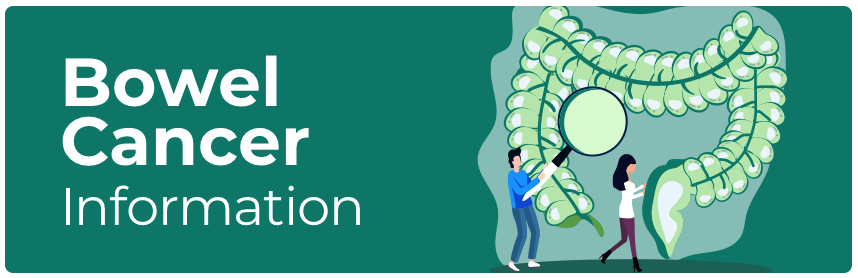
Colorectal cancer is also known as bowel cancer. Bowel cancer is cancer that starts in the large bowel (colon cancer) or back passage (rectal cancer).
According to the 2024 National Cancer Registry of Ireland (NCRI) report, around 2500 men and women are diagnosed with bowel cancer in Ireland every year 1052 men and 1047 women.
Explore our site to learn more about the condition and some helpful advice to support you at every step of your bowel cancer journey.

'Bowel Cancer: From diagnosis to recovery' is a free booklet that is available for download from the Marie Keating Foundation
01
What You Should Know
A statistical and preventative overview of bowel cancer in Ireland, detailing its prevalence, risk factors, and the specific lifestyle changes that can help reduce its occurrence.
02
How Bowel Cancer Affects You
A broad roadmap for navigating a bowel cancer diagnosis, covering the essential practical, medical, and emotional steps—from understanding your treatment options to managing the systemic side effects of chemotherapy.
03
Feelings & Emotions
An overview of the emotional journey associated with a cancer diagnosis—from shock and denial to the unique challenges of finishing treatment.
04
Bowel Cancer Support
You will come across a variety of medical and other professionals who will provide you with care, support and advice.
05
What Is Bowel Cancer
A technical and diagnostic overview of Bowel Cancer, detailing the biological symptoms, the standardized systems used for staging (TNM), and how doctors determine the severity (grade) of the disease.
06
Bowel Cancer & Exercise
The vital role of physical activity and nutrition in recovering from bowel cancer, featuring expert advice on how tailored exercise can combat fatigue and significantly reduce the risk of recurrence.
07
Fatigue
The reality of cancer-related fatigue, distinguishing it from everyday tiredness and offering practical, energy-saving “life hacks” to help patients navigate daily tasks during and after treatment.
08
Side Effects
The sensitive physical and intimate challenges following bowel cancer surgery and radiotherapy, specifically focusing on life with a stoma, body image, and long-term sexual health.
09
Bowel Screening
Learn about the BowelScreen program in Ireland, how the free at-home testing kit works and why regular screening is vital for early detection of bowel cancer.
10
Advanced Bowel Cancer
The concept of advanced and recurrent bowel cancer, clarifying how the disease spreads locally or to distant organs while highlighting why its origin remains the primary factor in treatment.
11
Diet & Nutrition
Dietary advice for patients recovering from bowel cancer treatments, focusing on managing digestive changes, wind, and diarrhea through trial-and-error and specialized eating habits.
12
Returning to Work
Legal and practical advice for returning to work with a personal survivor story, highlighting the balance between professional rights and the long emotional and physical recovery period.
13
Coping with Terminal Bowel Cancer
Understanding what to expect can help you and your loved ones find a sense of peace and preparation.
Our Bowel Cancer Campaigns

Bowel Cancer Symptoms are Easily Missed — 2026
Bowel Cancer Symptoms are Easily Missed — 2026

#NoRegrets — 2025
#NoRegrets — 2025

Talk Sh!t — 2025
Talk Sh!t — 2025

#NoRegrets — 2024
#NoRegrets — 2024
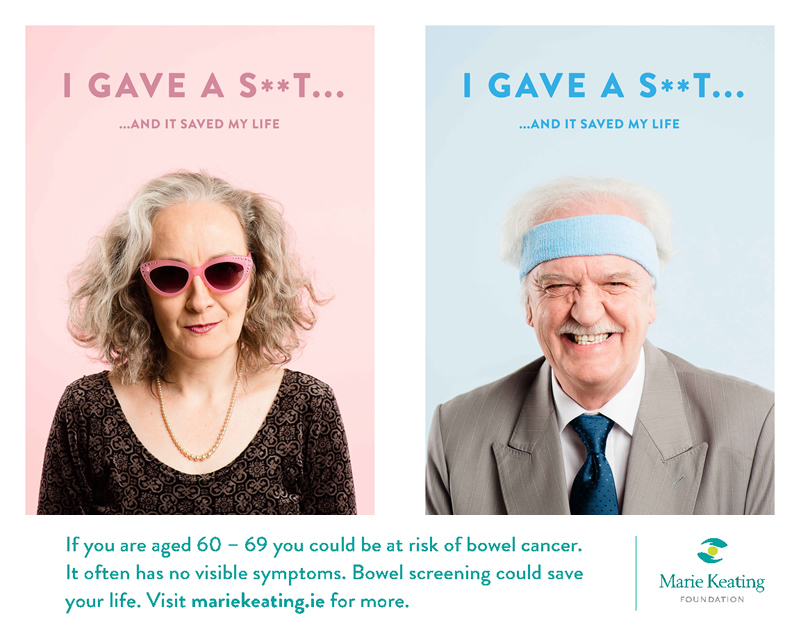
#NoRegrets — 2023
#NoRegrets — 2023
Join the Bowel Movement — 2022